 Custom Design. Factory Made. Globally Delivered BITY FULL HOUSE FACTORY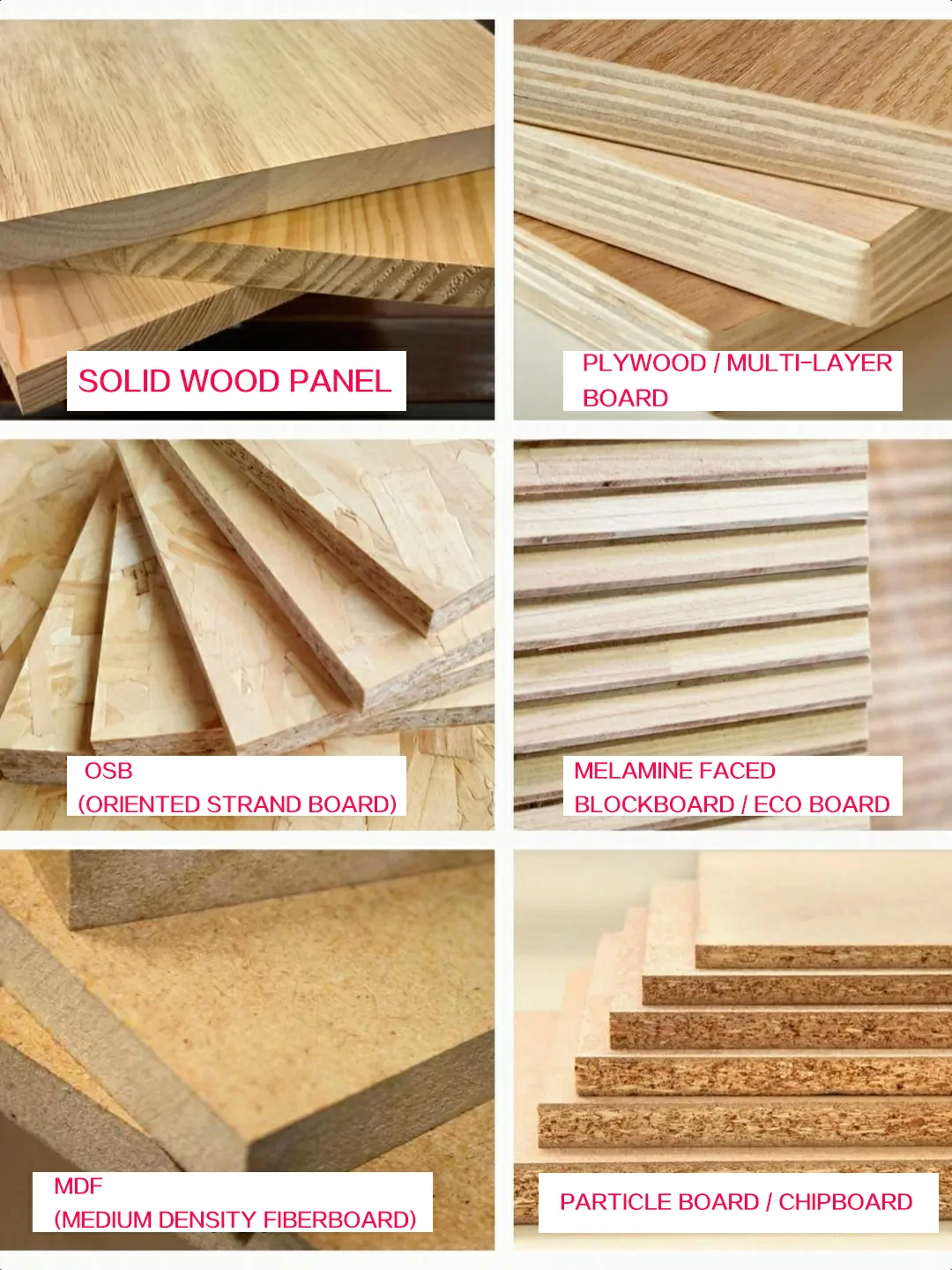
Particle Board vs Multilayer Board for Cabinet Doors? No More Confusion
After years in whole-house customization, the most common question I get is: which is better for cabinet doors, particle board or multilayer board?
Most homeowners get stuck at this step. Salespeople recommend expensive options, while friends share different experiences. Without professional site-based experience, people easily choose the wrong board, overpay, or face deformed cabinets after moving in.
Based on thousands of on-site construction cases, there is a simple truth: no board is absolutely better, only more suitable. Blindly choosing expensive materials without matching the usage scenario is the biggest renovation pitfall.
Here I share pure practical experience to help you distinguish these two main cabinet board types once and for all.
1. Particle Board — The Best Choice for Tall Cabinet Doors
Many people misunderstand particle board as low-quality material. In fact, high-density ENF-grade particle board has the most stable structure among all custom cabinet boards.
Pros: Ultra-flat surface, low internal stress, excellent anti-deformation performance. It is perfectly designed for modern full-height cabinet doors. Even for 2.4m–2.7m tall doors, it remains straight without warping or sagging after years of use. It is cost-effective, eco-friendly and aesthetically neat.
Cons: Average moisture resistance, not suitable for long-term humid or water-prone environments.
Best scenarios: Wardrobes, TV cabinets, entrance cabinets, bookcases, study cabinets and dry balcony cabinets.
✅ For all dry indoor areas, particle board is the first choice.
2. Multilayer Board — King of Humid Areas
Multilayer board is made of cross-laminated wood layers with compact structure, strong toughness and excellent screw holding power.
Pros: Superior waterproof and moisture-proof performance, strong load-bearing capacity and long service life, perfect for harsh humid spaces.
Cons: Easily affected by temperature and humidity, ultra-tall doors made of multilayer board are highly prone to warping, even with straighteners installed. It is much more expensive and less cost-effective.
Best scenarios: Kitchen cabinets, bathroom vanities, wet balcony cabinets.
✅ For humid and water-prone areas, choose multilayer board.
3. Two Biggest Board Selection Mistakes
Mistake 1: Using multilayer board for the whole house
Many homeowners upgrade everything blindly because multilayer board is more expensive. Result: wardrobes and TV cabinets gradually warp, door seams become uneven, causing long-term aesthetic problems.
Mistake 2: Using particle board for the whole house to save cost
Using particle board in kitchens and wet balconies leads to moisture swelling, mold, delamination and deformation, requiring renovation within a few years.
4. Final Selection Rule (100% Zero Error)
Dry indoor areas → High-quality ENF particle board
Stable, flat, non-deformable, high cost performance
Humid areas (kitchen, bathroom, wet balcony) → Multilayer board
Waterproof, moisture-proof, heavy-duty and durable
In home renovation, the most expensive option is never the best. The most suitable option is the most durable.
Understanding these two board types helps you avoid most customization mistakes.
If you are confused about material selection during your renovation, book our on-site survey. We customize the most suitable board solution for each space, helping you avoid unnecessary costs and hidden pitfalls.