 Custom Design. Factory Made. Globally Delivered BITY FULL HOUSE FACTORY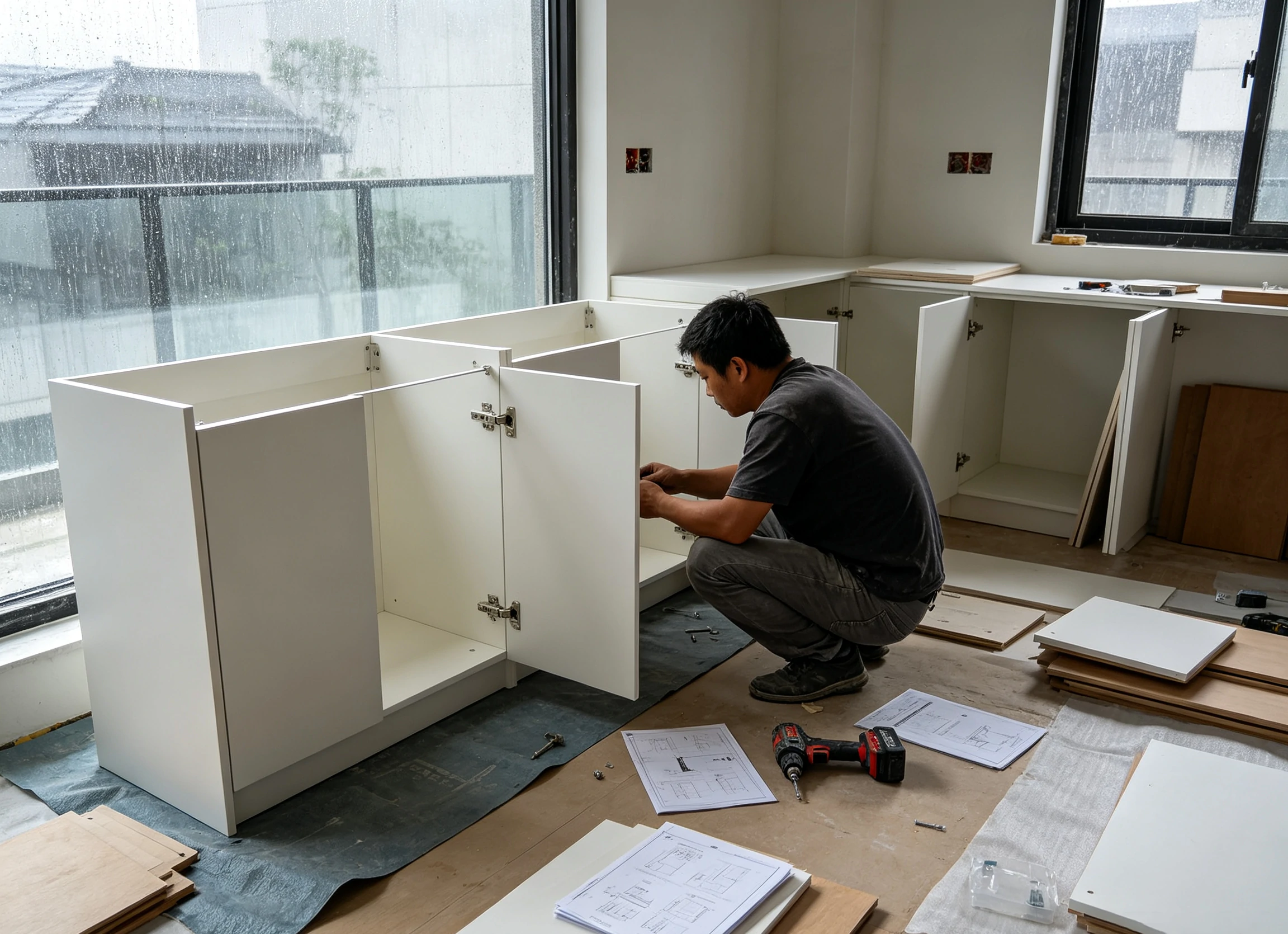
Installing Cabinets in Humid Plum Rain Weather: Craftsmanship Is Not the Only Test, Responsibility Matters More
Every year when the plum rain season arrives, continuous drizzle and pervasive dampness fill residential buildings. Many homeowners worry a lot: is it risky to arrange custom cabinet installation on rainy days? Some people think installation skills alone can handle humid environments, but years of on-site construction experience tell us the truth: installing cabinets amid heavy seasonal humidity tests two core factors—professional craftsmanship, and more importantly, the team’s sense of responsibility.
Skilled installers know how to assemble cabinets neatly, yet only responsible teams will strictly follow every moisture-proof procedure without cutting corners, preventing irreversible problems such as swollen panels, moldy backboards and rusted hardware that emerge months after installation.
1. Hidden Dangers of Plum Rain Installation That Irresponsible Teams Ignore
In muggy plum rain weather, the air moisture level often surges above 80%. If construction teams lack sufficient responsibility, they will skip critical damp prevention steps, triggering lasting cabinet faults later:
- Unwrapped cabinet panels are directly transported upstairs, absorbing outdoor moisture and swelling after assembly;
- Wet floors and wall baseboards are not dried before cabinet fixation, leading to mildew at cabinet bottom contact areas;
- Low-quality non-rust-proof hardware is used to cut costs, which oxidizes and sticks fast within one rainy season;
- Installation gaps are not reserved properly; damp air is sealed inside cabinet bodies, causing mold on internal boards.
2. Responsibility Reflects in Pre-Installation Moisture Isolation Protection
A responsible team will never rush to unpack cabinet panels the moment they arrive at the house on rainy days. We stick to rigid pre-construction damp isolation standards: First, all cabinet door panels, boards and accessories remain wrapped in thick waterproof bubble film and moisture-proof blankets until indoor humidity drops to a safe range. We avoid unpacking outdoors or damp corridors where rain vapor soaks wood panels. Second, installers check indoor walls, floors and window sills thoroughly. If water seepage or accumulated rainwater is found on walls near windows, construction pauses temporarily until the wet surfaces are fully dried with drying equipment. Third, moisture-proof foam pads are laid on the ground before placing any cabinet parts, separating wooden panels from cold, damp tile floors to stop moisture absorption from the bottom up.
Core Standard: No unpacking, no assembly before finishing full indoor dehumidification and isolation protection.
3. Strict Humidity Control During Assembly: Details Driven by Responsibility
Advanced assembly techniques guarantee neat splicing, while careful responsible operation locks out damp hazards during installation: We reserve standardized expansion gaps between cabinet bodies and walls, leaving channels for internal air circulation to prevent damp air from being trapped. All wall contact positions of cabinets are attached with waterproof and mildew-proof sealing strips to block wall moisture penetration. For cabinets close to balconies and windows where rain easily splashes, we apply extra mildew-proof sealant on all splicing seams. Every metal hinge, slide rail and connecting fitting we install is stainless steel anti-rust hardware specially prepared for rainy-season construction. Installers will also remind homeowners to keep windows slightly ajar for ventilation after installation and turn on dehumidifiers daily in the first week post-construction—this warm reminder comes from long-term accountability for the service life of customers’ cabinets.
4. Post-Installation Inspection: Responsible Teams Never Leave Hidden Damp Risks
Unscrupulous construction crews finish assembly quickly and leave immediately without comprehensive checks. Our installers’ responsibility extends to the final acceptance stage in plum rain weather: After full cabinet assembly, the team conducts a whole-house inspection targeting damp-prone zones: bottom of floor cabinets, wall joints, window-side storage units and balcony cabinets. They wipe away all residual water vapor on panel surfaces and check every sealing seam for gaps that may let moisture seep in. We hand over a rainy-season cabinet maintenance guide to homeowners, including daily ventilation methods, dehumidification tips and early warning signs of panel damp swelling. If minor moisture traces are found during inspection, workers will handle the issue on-site before wrapping up the project, rather than leaving customers to face mold problems later.
Why Responsibility Outweighs Pure Technical Skill in Plum Rain Construction
Any experienced installer can master cabinet assembly techniques through training. However, resisting the urge to speed up construction, strictly carrying out every tedious moisture-proof step, and taking full accountability for the cabinets’ long-term condition requires genuine professional responsibility.
Great craftsmanship delivers a visually tidy cabinet, yet solid responsibility ensures the cabinets stay intact, mold-free and durable through every annual plum rain cycle for decades to come. Many families encounter deformed, mildewed custom cabinets one year after installation, simply because their construction team prioritized speed over damp prevention details during humid weather construction.
Advice for Homeowners Arranging Cabinet Installation in Rainy Seasons
When booking whole-house customization during plum rain, do not only ask merchants about their installation technology. Confirm two key points to judge the team’s sense of responsibility: 1. Whether they provide complete waterproof packaging for all panels and pause construction if indoor humidity exceeds the safe threshold; 2. Whether they use full anti-rust hardware and attach moisture-proof sealing strips as standard configuration without extra charges. A brand that values long-term cabinet quality over short construction efficiency is worthy of your trust during humid rainy-season renovation.
If you need custom cabinet installation during plum rain weather, book our free on-site measurement service. Our installers follow complete moisture-proof construction specifications, and every construction link is supervised with full accountability to protect your custom cabinets from damp damage all year round.