Many homeowners ask: “What is the real factory purchase price of cabinet panels?” Some salesmen inflate board prices to make bigger profits, while ultra-low quotes may hide quality compromises. As an insider, let’s break down the truth about panel wholesale costs.
All prices below reference recent bulk wholesale market rates from source factories in East and South China for 18mm thick panels.
Wholesale Price List for 18mm Cabinet Panels
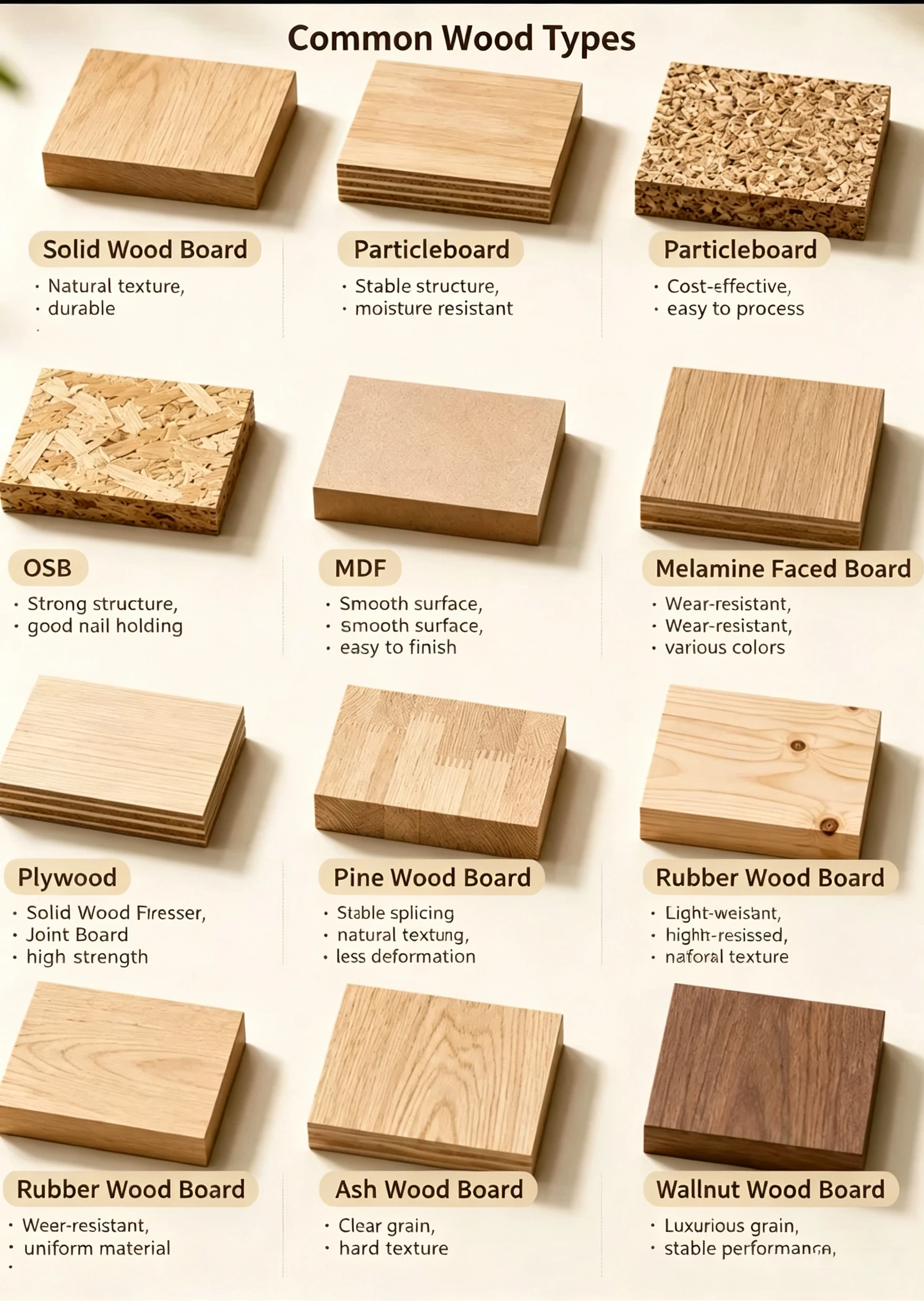
- Particleboard
- Domestic standard E0 grade: ¥70–98 per sheet
- ENF grade: ¥108–128 per sheet
- Branded finished boards (Daya, Lushuihe): ¥130–180 per sheet
- OSB / LSB (Oriented Strand Board)
- ENF grade raw boards (Luli, Wanhua HEXIANG board): ¥98–128 per sheet
- ENF grade finished boards with decorative veneer: ¥140–180 per sheet
- Multi-layer Plywood
- E0 grade: ¥140–175 per sheet
- ENF grade: ¥185–215 per sheet
- Premium branded multi-layer boards (TuBao, Moganshan): ¥200–250 per sheet
- Blockboard (solid wood core / Ecological board)
- Cedar core, E0 grade: ¥160–180 per sheet
- Cedar core, ENF grade: ¥180–200 per sheet
- PET Large Panels (for cabinet doors)
- ENF grade LSB substrate, matte or high-gloss PET surface: ¥138–168 per sheet
Critical reminder: These are raw bulk purchase prices directly from factories. They do NOT include CNC cutting, edge banding, drilling, packaging, shipping, hardware, design, installation, labor, overhead or after-sales warranty costs.
What most customers misunderstand
Many people think: If the panel’s wholesale price is X, then the finished cabinet should not cost much more. This is the biggest misconception.
A raw board is just a large flat sheet. To turn it into usable cabinet parts, the factory needs CNC cutting, edge banding, hinge hole drilling, quality inspection, packaging and shipping. These manufacturing labor and machine depreciation fees add up quickly.
Other costs added to the finished cabinet
- Hardware: hinges, drawer slides, soft-close dampers, handles, support brackets
- Design: site measurement, layout drawing, repeated design revisions
- On-site installation: installer labor, transport, auxiliary materials
- Business overhead: showroom rent, staff salaries, after-sales service, warranty risk
- Waste rate: Custom cutting creates panel waste, which is factored into the cost
Common sales tricks around panel prices
Merchants advertise cheap board prices, then add separate fees for cutting, edge banding, drilling and packaging. Your final total becomes much higher.
2. Mix different board grades
Use ENF-grade panels for visible cabinet doors, but cheaper lower-grade boards for hidden cabinet carcasses, without telling you in advance.
3. Brand name bluffing
Say “big brand panel”, but use unbranded generic boards with similar surface colors. Always check the anti-counterfeit code and write the panel brand and grade in your contract.
What you should know before buying
Do not judge the whole cabinet price only by the raw panel wholesale cost. The board itself usually accounts for less than half of the total finished cabinet price.
Low-cost raw boards may come with poor edge banding, unstable quality and no after-sales support. Paying a slightly higher price for standardized processing and reliable service is often a smarter choice.
Final Thoughts
Knowing the panel’s purchase price helps you avoid ridiculous markup, but you should not only chase the cheapest board. Good cabinets rely on qualified panels, precise factory processing, professional installation and long-term after-sales support.
If you plan whole-house custom cabinets, book our free on-site measurement service. We clearly list panel brand, grade and all processing items in the quotation, with no hidden extra charges.