Many people imagine that a whole-house custom cabinet boss only meets customers, talks about prices and signs contracts. In reality, this job demands comprehensive skills. A competent owner has to master both design thinking and production craftsmanship.
Understand design beyond pretty renderings
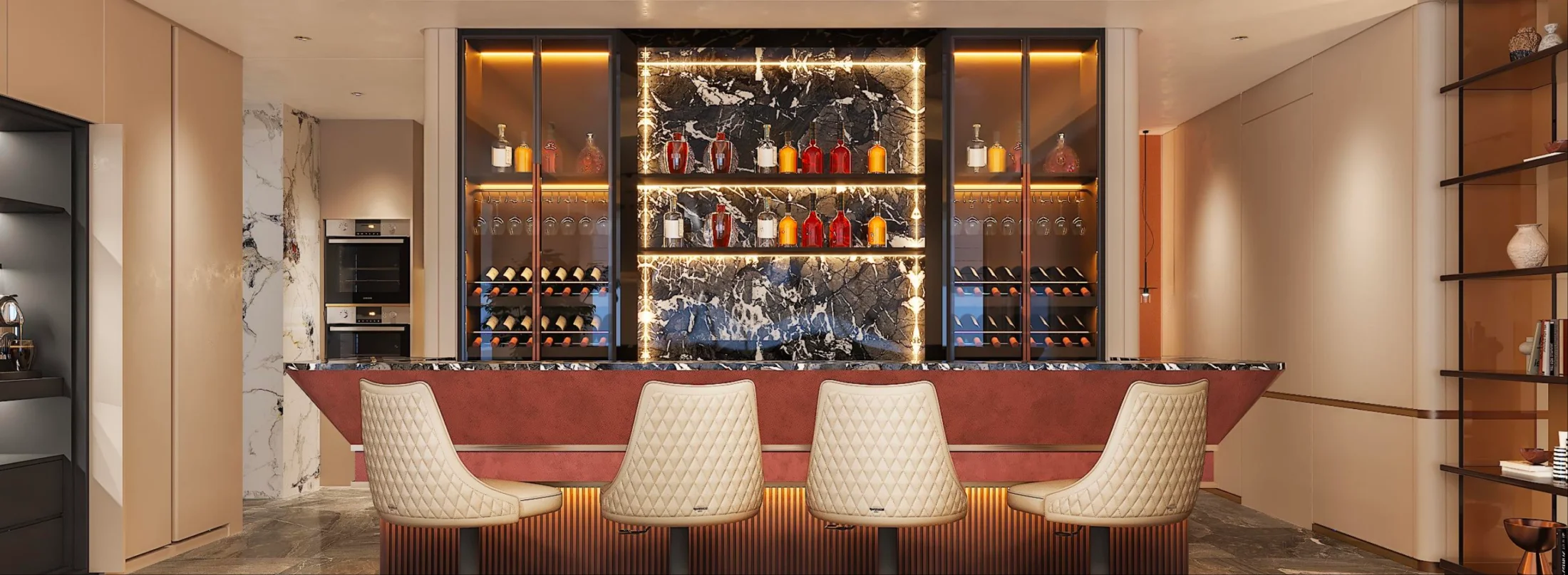
Beautiful renderings are easy to generate, but practical storage design is another matter. The owner must judge whether the designer’s layout fits the family’s living habits.
They need to check storage logic, cabinet dimensions, space constraints, ergonomics and potential design flaws. A design that looks good on paper may be impossible to produce or inconvenient for daily use. The boss must catch these issues before sending drawings to the factory.
Be familiar with all panel types and material properties
Owners need to tell the differences between particleboard, LSB, multilayer plywood and ecological boards. They know the pros and cons of each material, suitable application scenarios, moisture resistance and environmental grades.
They must also know edge banding differences between PUR and EVA glue, and the matching requirements for PET door panels. This knowledge helps them select proper materials for different spaces like kitchens, bedrooms and balconies.
Master factory processing knowledge
When production starts, many details require professional judgment: CNC cutting tolerance, hole positioning accuracy, milling and sanding standards.
If there are mistakes in cutting or drilling, the whole panel will be wasted. The owner needs to communicate with the factory quickly, identify the root cause of errors and avoid repeated rework and cost losses.
Supervise on-site installation craftsmanship
Installation is the final stage that directly affects customer experience. The owner needs to check cabinet levelness, door gap consistency, drawer sliding smoothness and sealing details.
Even well-made panels can become defective due to careless installation. When encountering wall unevenness or on-site dimensional deviation, the owner must come up with reasonable adjustment solutions.
Coordinate all links and solve unexpected problems
A custom cabinet project involves designers, factories, installers, hardware suppliers and customers. The owner acts as the coordinator of the whole chain.
They need to handle delayed production, damaged panels, customer complaints and after-sales maintenance. Without craftsmanship and design knowledge, they cannot distinguish whether the problem comes from design, materials, factory processing or installation.
Design and craftsmanship are the foundation of trust
If a boss only knows how to sell but lacks design and craftsmanship knowledge, it is easy to overpromise customers. Once problems emerge, they cannot give professional solutions and will lose credibility quickly.
When the owner understands every process, they can set clear standards for the team, control quality at every stage and reduce project risks.
Final Thoughts
Running a custom cabinet shop means being a designer, technologist, project manager and service coordinator at the same time.
Good design creates practical storage space, while solid craftsmanship guarantees long-term stable use. If you want a team with deep understanding of both design and workmanship for your home, book our free on-site measurement service.