 Custom Design. Factory Made. Globally Delivered BITY FULL HOUSE FACTORY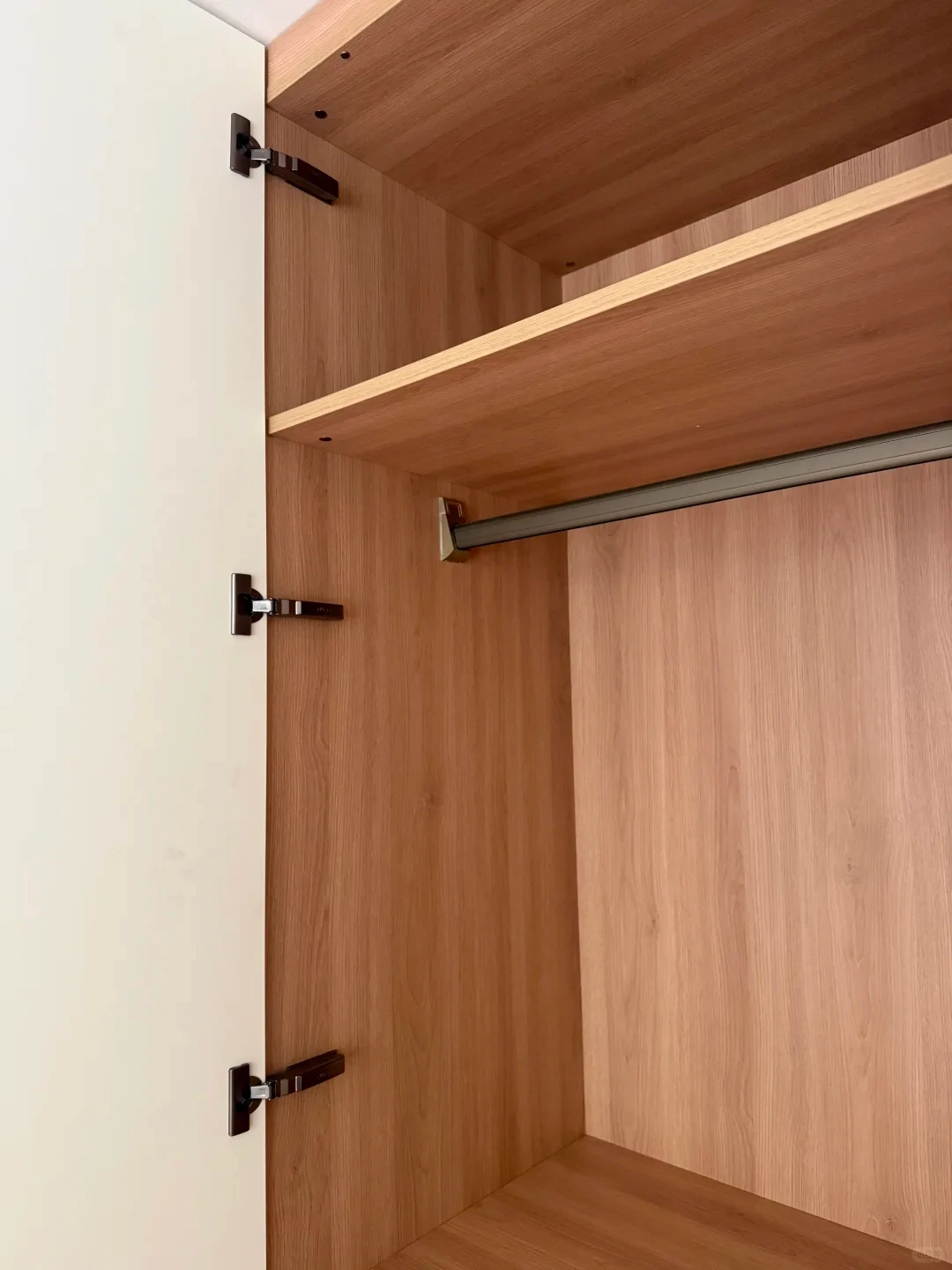

Cabinet Doors Won’t Close Tightly? 90% Caused by Poor Hardware Adjustment
Many homeowners face annoying problems after moving in: Cabinet doors have uneven gaps, cannot close tightly, bounce open automatically, or look crooked.
Most people think the boards are deformed or defective. However, after replacing hinges and tightening screws, the problem still exists.
Based on thousands of on-site customization cases, the real truth is clear: 90% of poorly closed cabinet doors are not caused by board quality, but by unadjusted hinges.
Most installers only fix the doors roughly without precise 3D adjustment, gap calibration and closing tests. The hardware is left in a semi-functional state, leading to loose gaps and stuck doors over time.
1. Why New Cabinet Doors Still Have Uneven Gaps
Hinges are the most precise hardware in whole-house customization. Qualified hinges support 3D adjustment: left-right, up-down, and depth fine-tuning.
If installers adjust hinges casually, these problems occur:
1. Uneven left and right door gaps
2. Misaligned upper and lower doors
3. Doors fail to fit tightly and leave gaps
4. Doors bounce back and cannot stay closed
The boards are not deformed at all. The only reason is inaccurate installation and adjustment.
Especially for full-height tall doors, the heavy weight requires extremely precise hinge calibration. Even a 1mm deviation will cause obvious uneven gaps.
2. The Most Overlooked Adjustment Detail (Core Reason)
Most workers only adjust left-right gaps but skip depth fine-tuning.
The eccentric screw at the tail of the hinge controls door fitting tightness, rebound strength and closing clearance.
Without depth adjustment, doors look aligned but cannot fully adsorb and close tightly. They bounce open easily after touching or shaking, making gaps larger over time.
This is the common industry cut-corner behavior: installed roughly, never finely adjusted.
3. How to Fix Common Cabinet Door Problems
Uneven door gaps
Adjust the front horizontal screw to unify all door gaps with neat and straight lines.
Doors misaligned up and down
Adjust the base up-down screw to level all cabinet doors without height difference.
Doors cannot close tightly and rebound
Adjust the tail depth eccentric screw to enhance fitting tightness, ensuring full closure with no gaps or rebound.
4. Standard Professional Installation Standard
Formal factory installation requires strict final inspection:
- All door gaps are uniform with millimeter-level precision
- Tight closing with zero rebound and zero gaps
- Smooth opening and closing with no abnormal noise
- Tall doors keep vertical and parallel without skew
Most low-price customized orders and outsourced decoration teams pursue speed instead of precision, skipping hardware fine-tuning and leaving long-term hidden problems.
Final Verdict
If your cabinet doors cannot close tightly or have messy gaps, do not blame board quality or cabinet deformation.
Most problems come from lazy installation and incomplete hardware adjustment.
Hardware is the joint of cabinets. Fine adjustment determines the ten-year using experience.
If your existing cabinet doors have gaps, rebound or stuck problems, or you want flawless customized cabinet installation, book our on-site inspection service. We finely adjust every hardware detail to ensure stable and perfect cabinet performance.