When it comes to whole-house custom cabinet construction, most people focus all their attention on design drawing confirmation, panel material selection and on-site installation. Once workers finish assembling all wardrobes, TV cabinets, sideboards and balcony storage units, homeowners tend to take a quick glance, feel the cabinets look neat, and let the installers leave directly. Yet few realize there is a vital last step that determines the long-term service life of your custom furniture: comprehensive whole-house acceptance plus professional maintenance handover. This crucial link is ignored by the vast majority of customers.
Many renovation headaches arise months after move-in — uneven cabinet door gaps, sticky slide rails, mildew-prone wall seams, dented hidden panels — all because homeowners skipped this final detailed check and failed to raise problems before the construction team departed.
Why Is This Final Step Constantly Ignored?
There are two main reasons customers overlook post-installation acceptance:
First, after days of noisy construction, homeowners just want the installation work to end quickly. They feel tired of repeated site checks and assume neat outer appearance equals flawless quality.
Second, irregular installation teams never take the initiative to guide customers through systematic inspection. They rush to pack up tools and leave as soon as assembly is complete, deliberately avoiding detailed checks that may expose construction defects.
Without strict acceptance on the spot, all minor flaws become your long-term troubles after the team signs off the project.
What Exactly Does This Overlooked Final Step Include?
1. Full Visual Inspection of All Panels & Surfaces
Most people only check cabinet doors facing the living area, ignoring hidden areas such as cabinet inner boards, back panels, bottom base panels and top high cabinet interiors. Installers may hide scratched, dented or discolored boards in invisible corners.
During formal acceptance, every single panel needs to be inspected for paint scratches, collision marks, color difference and peeling veneer. Any damaged panels must be replaced or repaired on-site before the team leaves.
2. Comprehensive Hardware Function Test
A quick casual pull of drawers cannot detect potential hardware faults. The standard acceptance requires repeatedly opening and closing every cabinet door, sliding every drawer, lifting pull-out baskets and testing hydraulic damping dozens of times.
Check for abnormal squeaking, unbalanced door gaps, loose hinges, stuck slide rails and ineffective slow-close buffers. Small hardware defects will worsen rapidly within half a year if left unadjusted on site.
3. Gap, Seam & Sealing Detail Inspection
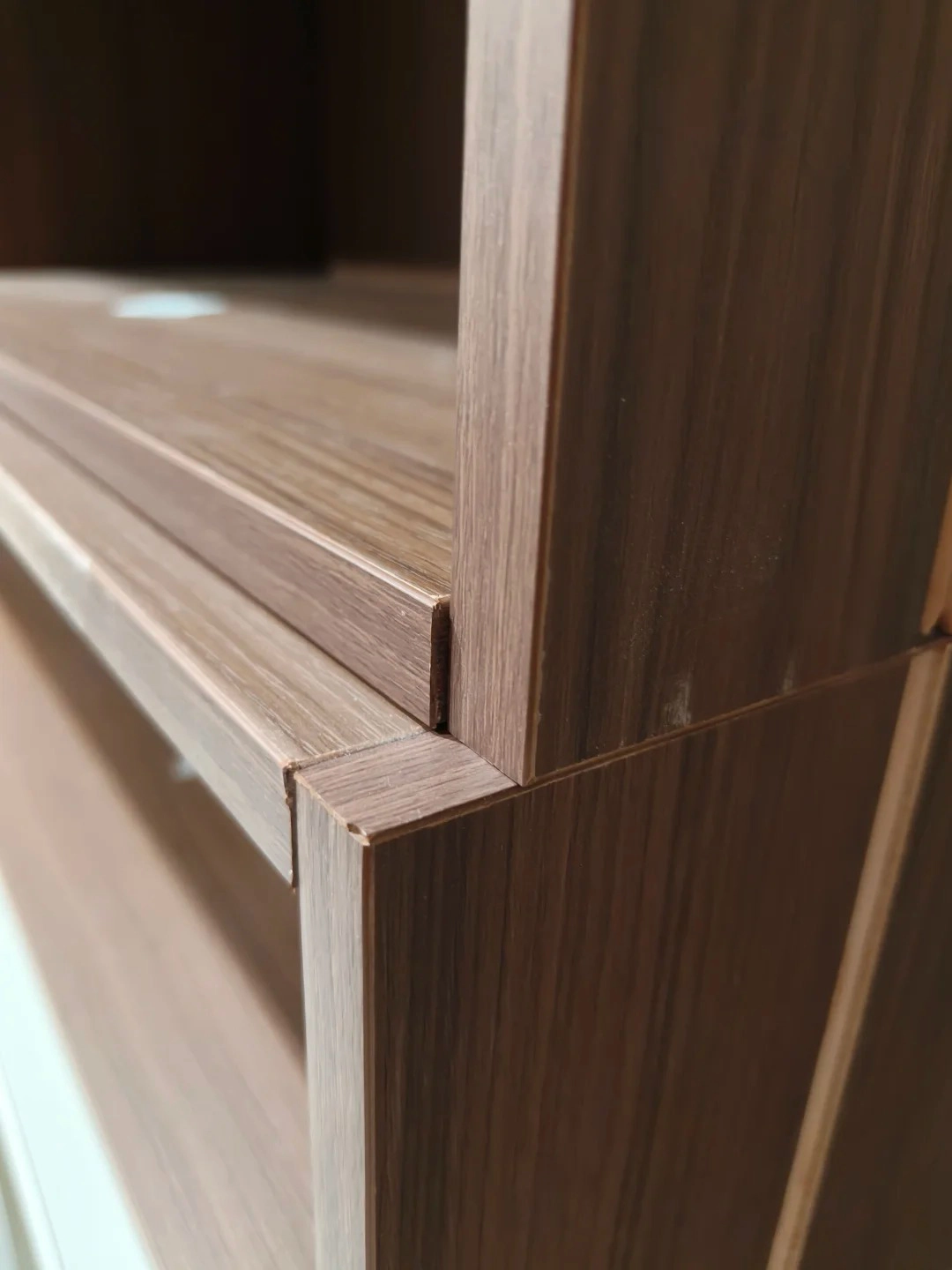
Check uniform gaps between adjacent cabinet doors, the fitting tightness between cabinets and walls/floors, and the neatness of color-matched silicone sealant along wall joints.
Unprofessional workers often leave uneven wide-narrow gaps or messy overflowing glue. If you skip this inspection, rework will require removing finished cabinets later, causing secondary damage to walls and floors.
4. Hidden Moisture & Safety Check
Focus on cabinets near windows, balconies and water sources. Confirm waterproof sealing strips are fully attached and expansion fixing screws are firmly mounted on solid walls to prevent cabinet tilting and damp mildew.
For families with kids, check sharp exposed edges without sanding and unstable floating cabinets that pose safety hazards.
5. Official Maintenance Handover & Document Sign-Off
This is the most easily forgotten segment of the whole process. Standard brand service includes handing over warranty cards, hardware spare parts, cabinet maintenance manuals and seasonal damp-proof tips to homeowners.
Professional installers will clearly explain how long to retain surface protective film, daily cleaning methods, plum rain dehumidification skills and after-sales contact channels. Many customers never receive these documents because they skip formal handover.
Consequences of Skipping This Final Step
- Minor installation defects cannot be fixed for free; merchants may charge extra labor fees for later rework
- Damaged hidden panels and faulty hardware are discovered months later, disrupting daily household use
- No official warranty documents, leading to disputes when requesting after-sales repair
- Homeowners lack professional maintenance knowledge, accelerating cabinet deformation, mildew and aging
Standard Complete Acceptance Process From Our Professional Team
We never leave the construction site without finishing the full final acceptance process together with the homeowner:
1. Guide the customer to inspect every cabinet zone room by room, from entryway to balcony;
2. Test all hardware repeatedly and adjust uneven gaps on the spot;
3. Touch up messy sealant and fix small construction flaws immediately;
4. Hand over complete warranty paperwork, spare hinges and maintenance guidelines;
5. Confirm no remaining problems and sign the acceptance form together.
This standardized process eliminates all hidden risks before project completion.
Tips for Homeowners Preparing Whole-House Customization
Never rush installers to finish work early once cabinet assembly is done. Reserve at least 30 minutes for the full acceptance check. Do not sign the completion form casually until every inspection item passes standard requirements.
When selecting custom furniture brands in advance, confirm whether they provide formal on-site acceptance and complete maintenance handover service. Brands that ignore this vital final step cannot guarantee long-term product quality and after-sales support.
If you are planning whole-house custom cabinets and worry about missing key acceptance links, book our free on-site measurement service. Our team strictly implements full post-installation inspection and detailed handover procedures to safeguard every customer’s furniture quality.