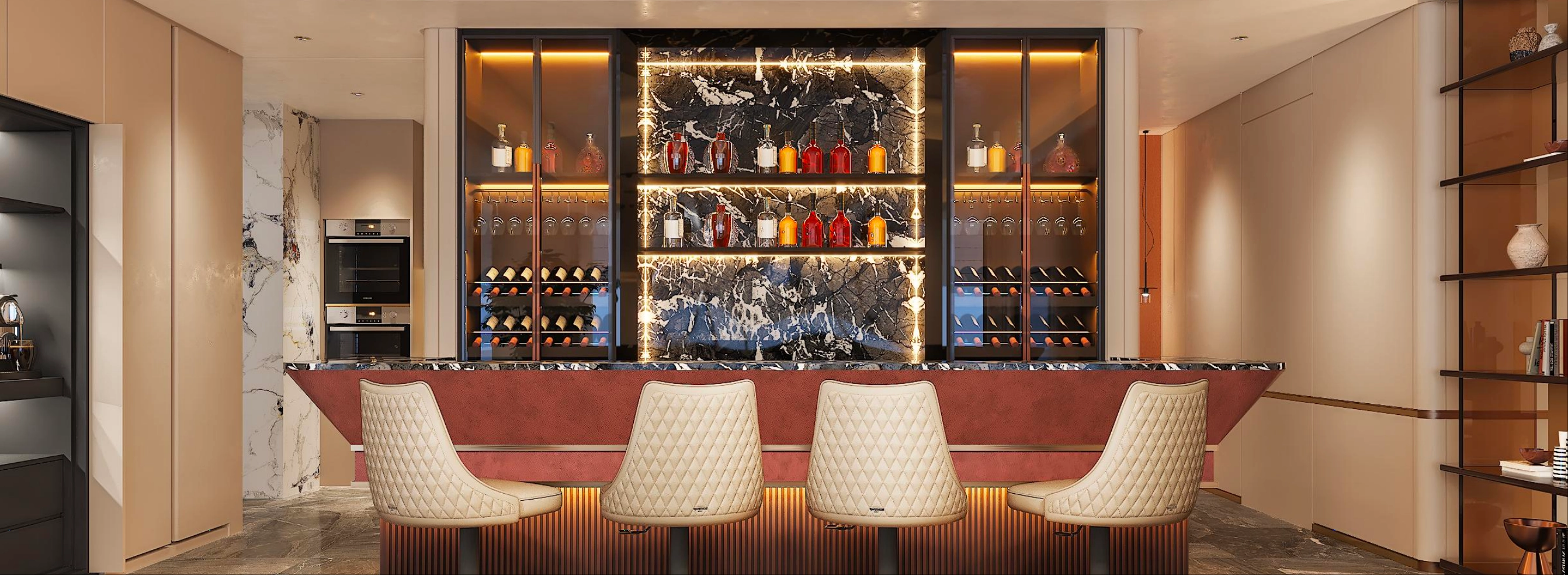
Kitchen countertops are one of those decisions that seem straightforward until you actually start researching. Then suddenly you're deep in a rabbit hole of material comparisons, durability ratings, and aesthetic debates that can make your head spin. If you're planning a custom kitchen - especially one designed for a high-end home or villa - the countertop choice will define the space more than almost any other single element.
In 2026, two materials dominate the conversation at the premium end of the market: quartz and rock slabs (also known as sintered stone or porcelain slabs). Both are excellent. Both have passionate advocates. And the "right" choice depends entirely on your specific situation. Let's break it down honestly.
Quartz Countertops: The Reliable Powerhouse
Quartz has earned its position as the most popular countertop material in the world, and it's not hard to see why. Engineered from roughly 90-95% ground natural quartz crystals bound with polymer resins, quartz countertops offer a combination of beauty and practicality that's genuinely hard to beat.
According to the National Kitchen & Bath Association, approximately 78% of design professionals expect quartz to remain the preferred countertop surface heading into 2026. That kind of industry consensus doesn't happen by accident.
The Strengths
Durability is quartz's calling card. It's highly resistant to scratching, staining, and chipping under normal kitchen use. Unlike natural stone, it doesn't require periodic sealing - a maintenance advantage that compounds over years of ownership. For busy kitchens where the countertop sees daily action from meal prep, hot pots, spilled wine, and the occasional dropped utensil, quartz handles it all with minimal fuss.
Aesthetically, modern quartz has reached a level of sophistication that would have been unimaginable a decade ago. Manufacturers can now produce slabs with veining patterns that closely mimic Calacatta marble, Carrara marble, and other natural stones - but without the porosity, etching vulnerability, and maintenance demands of the real thing. The 2026 trend palette leans toward warm neutrals: taupe, creamy beige, and sand tones that pair beautifully with wood cabinetry and matte hardware finishes.
Consistency is another underappreciated advantage. Because quartz is engineered, you can order multiple slabs with confidence that they'll match. Natural stone, by contrast, varies from slab to slab - which can be charming or frustrating, depending on your perspective and your project's requirements.
The Limitations
Quartz isn't invincible. It's sensitive to prolonged UV exposure, which can cause discoloration over time - a consideration for kitchens with large windows or outdoor kitchen applications. It's also not as heat-resistant as some alternatives; placing a scorching hot pan directly on a quartz surface can potentially cause thermal shock damage. (Use trivets. Always use trivets.)
And while quartz mimics natural stone beautifully, some purists argue that it lacks the depth and character of genuine stone. There's a philosophical dimension to this debate that goes beyond technical specifications - it's about whether you value the predictability of engineered perfection or the organic uniqueness of natural materials.
Rock Slabs: The New Contender
Rock slabs - technically sintered stone, produced by compressing natural minerals under extreme heat and pressure - have been gaining serious momentum in the luxury kitchen market. Brands like Dekton, Neolith, and various Chinese manufacturers have pushed the technology forward rapidly, and the results are impressive.
The Strengths
Heat resistance is where rock slabs truly shine. You can place a hot pan directly on a sintered stone surface without worry - it won't scorch, crack, or discolor. For serious cooks who don't want to think twice about where they set down a pot, this is a meaningful practical advantage.
UV resistance makes rock slabs suitable for outdoor kitchens and spaces with significant sun exposure - applications where quartz would be problematic. If your villa kitchen opens onto a terrace or if you're designing an outdoor cooking area, rock slabs deserve serious consideration.
The material is also remarkably scratch-resistant, stain-resistant, and non-porous. It won't absorb liquids, won't harbor bacteria, and can be cleaned with virtually any household cleaner without risk of damage. From a hygiene perspective, it's about as close to bulletproof as a countertop surface gets.
Aesthetically, rock slabs offer large-format options that minimize seams - some slabs are available in sizes up to 3.2 meters by 1.5 meters, allowing for expansive, uninterrupted surfaces that create a dramatic visual impact. The range of available finishes and patterns has expanded enormously, from marble-look designs to concrete-inspired textures to bold, abstract patterns.
The Limitations
Rock slabs are harder to fabricate than quartz. Cutting, shaping, and installing sintered stone requires specialized tools and experienced fabricators. This can limit your options for complex edge profiles and may increase installation costs. If your kitchen design calls for intricate cutouts or unusual shapes, discuss feasibility with your manufacturer early in the process.
The material is also more brittle than quartz in certain impact scenarios. While it's extremely hard on the surface, a sharp point impact - like dropping a heavy cast-iron pan corner-first - can potentially cause chipping. This is a relatively rare occurrence in normal use, but it's worth knowing about.
Cost is generally higher than quartz, though the gap has been narrowing as production scales up and more manufacturers enter the market.
How BITY Approaches the Countertop Decision
At BITY, we work with both quartz and rock slab materials across our custom kitchen projects. Our recommendation depends on the specific context of each project:
For indoor kitchens with standard use patterns, quartz remains our most frequently recommended option. The combination of beauty, durability, low maintenance, and cost-effectiveness makes it the right choice for the majority of projects. Our standard kitchen packages feature high-quality quartz stone countertops paired with waterproof cabinet bodies and flame-retardant boards.
For outdoor or semi-outdoor kitchens, kitchens with heavy cooking use, or projects where the client prioritizes absolute heat resistance, we recommend rock slabs. The premium is justified by the material's superior performance in these specific scenarios.
For some projects, we use both - quartz for the main work surfaces and rock slabs for the island counter or a dedicated cooking zone. This hybrid approach lets you optimize material selection for different functional areas within the same kitchen.
Beyond the Countertop: The Complete Kitchen System
It's worth stepping back to note that the countertop, while important, is just one component of a custom kitchen system. At BITY, we design kitchens as integrated solutions where every element works together:
The cabinet body construction uses waterproof materials that resist the moisture inherent in kitchen environments. Flame-retardant boards provide an additional safety layer. Hardware - hinges, drawer slides, pull-out mechanisms - uses damping technology for quiet, controlled operation. Embedded appliance integration ensures that ovens, dishwashers, and other equipment fit seamlessly into the cabinetry.
Layout options span L-shaped, U-shaped, double straight, and island configurations, each optimized for different kitchen sizes and cooking workflows. The countertop material choice should be made in the context of this larger system, not in isolation.
Practical Decision Framework
If you're still weighing the options, here's a practical framework:
Choose quartz if: you want a proven, low-maintenance surface with excellent aesthetics; your kitchen is primarily indoors; you're comfortable using trivets for hot cookware; you prefer a wider range of edge profile options; budget optimization is a consideration.
Choose rock slabs if: heat resistance is a top priority; your kitchen has significant sun exposure or outdoor elements; you want the largest possible seamless surface area; you prefer the specific aesthetic character of sintered stone; you're willing to invest in the premium for superior thermal performance.
Choose both if: your kitchen has distinct functional zones that would benefit from different material properties; you want to create visual contrast between the main countertop and the island; your design concept calls for material variety.
The Trend Trajectory
Looking at where the market is heading, both materials have strong futures. Quartz manufacturers continue to push the boundaries of pattern realism and finish variety - the 2026 collections feature matte and textured finishes that add tactile dimension to the visual appeal. Rock slab technology is becoming more accessible as production capacity expands globally.
The broader trend in kitchen design is toward surfaces that combine beauty with genuine performance - materials that look stunning in photos but also stand up to the realities of daily cooking. Both quartz and rock slabs deliver on this promise, which is why both continue to gain market share at the expense of less durable alternatives.
Whatever you choose, the most important thing is to work with a manufacturer who understands both materials deeply and can guide you toward the right choice for your specific project. A great countertop isn't just about the material - it's about how that material is fabricated, installed, and integrated into the larger kitchen design. Get those details right, and you'll have a kitchen surface that brings you satisfaction every single day.
Installation Considerations You Should Know
The countertop material you choose also affects the installation process, and it's worth understanding these differences before making your decision.
Quartz installation is well-established and widely understood by fabricators worldwide. The material can be cut, shaped, and polished using standard stone fabrication equipment, and most experienced countertop installers are comfortable working with it. Edge profile options are extensive - from simple eased edges to elaborate ogee profiles - because the material machines predictably and cleanly.
Rock slab installation requires more specialized expertise. The material is harder and more brittle than quartz, demanding diamond-tipped cutting tools and careful handling to prevent chipping during fabrication. Not all countertop installers have experience with sintered stone, so it's important to verify your installer's capabilities before specifying this material. The good news is that as rock slabs gain market share, the pool of experienced fabricators is growing steadily.
For both materials, the quality of the substrate - the cabinet structure that supports the countertop - matters enormously. A premium countertop installed on a weak or uneven cabinet body will develop problems over time, regardless of how good the surface material is. This is why at BITY, we design the countertop and cabinet system as an integrated unit, ensuring that the support structure is engineered specifically for the weight and span requirements of the chosen countertop material.
Maintenance and Long-Term Care
Both quartz and rock slabs are relatively low-maintenance compared to natural stone, but they're not zero-maintenance. Understanding the care requirements helps you make a choice that fits your lifestyle.
Quartz countertops should be cleaned with mild soap and water or a non-abrasive household cleaner. Avoid harsh chemicals like bleach or oven cleaner, which can damage the resin binder over time. Wipe up spills promptly - while quartz is stain-resistant, prolonged exposure to strongly pigmented substances (turmeric, red wine, coffee) can potentially cause discoloration on lighter-colored surfaces.
Rock slabs are more chemically resistant than quartz and can tolerate a wider range of cleaning products without damage. Their non-porous surface means spills sit on top rather than penetrating, making cleanup straightforward. However, the grout lines between slabs (if any) require the same attention as any tiled surface - periodic cleaning and resealing to prevent staining and mold growth.
For both materials, avoid using the countertop as a cutting surface. While both are scratch-resistant, repeated knife contact will eventually leave marks - and it's terrible for your knives. Use cutting boards. Your countertop and your chef's knife will both thank you.
Ultimately, the countertop is the surface you'll touch, see, and use more than any other element in your kitchen. It's worth taking the time to understand your options, handle samples of both materials, and discuss your specific needs with your kitchen designer. The right choice will serve you well for decades - and every time you run your hand across that smooth, beautiful surface, you'll know you made the right call. 
 Custom Design. Factory Made. Globally Delivered BITY FULL HOUSE FACTORY