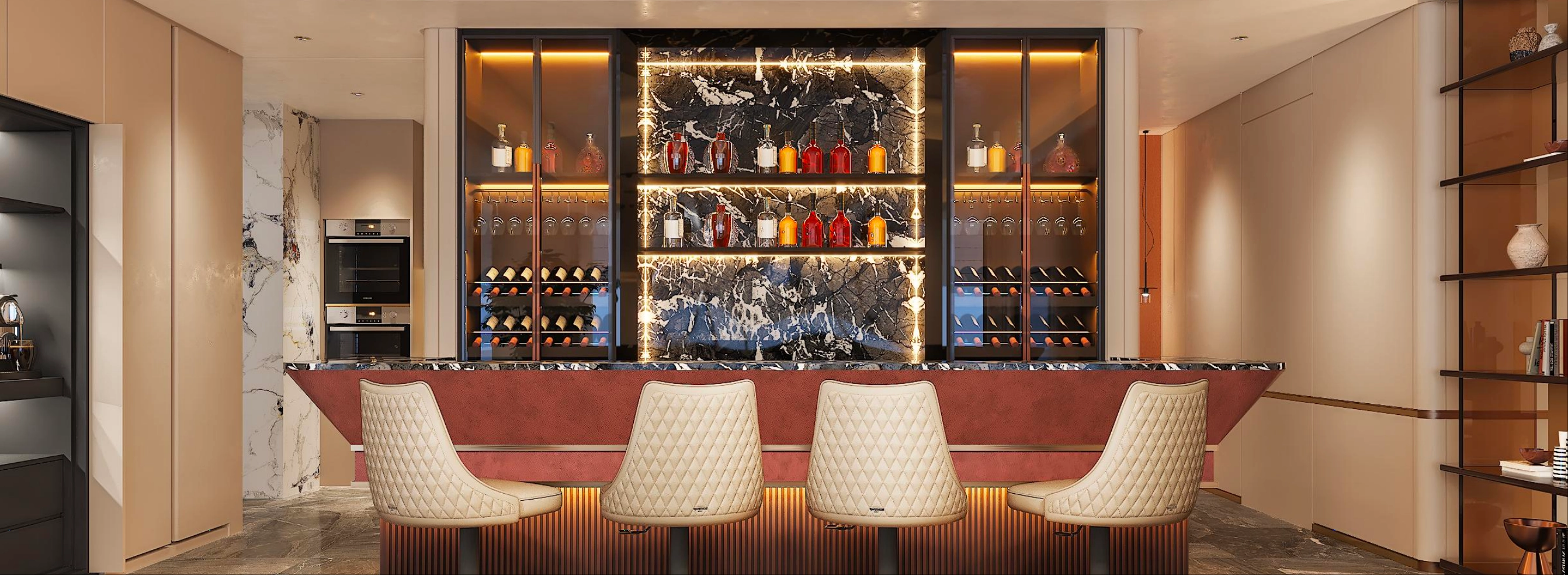
If you've been paying attention to the furniture world lately, you've probably noticed a seismic shift. The days of walking into a showroom, picking a standard-size wardrobe off the floor, and hoping it fits that awkward corner in your bedroom - those days are fading fast. In their place, a new model has emerged: whole-house customization. And in 2026, it's not just a trend. It's becoming the default expectation for homeowners who care about how their spaces look, feel, and function.
At BITY Full House Customization, we've had a front-row seat to this transformation. As a factory-direct brand specializing in custom wardrobes, cabinets, sanitary ware, and infinity pools, we've watched demand evolve from "can you make this a little wider?" to "can you design my entire home interior as one cohesive experience?" The answer, of course, is yes - and the reasons behind this shift tell a fascinating story about where modern living is headed.
The Numbers Don't Lie
The global custom furniture market has been on a remarkable trajectory. Industry analysts estimate the sector reached approximately USD 54 billion in 2025, with projections pointing toward continued double-digit growth through 2032. That's not incremental change - that's a fundamental restructuring of how people buy furniture.
What's driving it? Several forces are converging at once. Urbanization continues to push housing into more creative configurations. A penthouse in Dubai doesn't have the same spatial DNA as a villa in Tuscany or a townhouse in Shanghai. Standard furniture simply can't address the diversity of modern floor plans. Meanwhile, consumers have grown accustomed to personalization in every other aspect of their lives - from their phone cases to their coffee orders - and they're bringing that same expectation home.
Beyond Furniture: The Integrated Living Experience
Here's what makes whole-house customization fundamentally different from traditional custom furniture: it's not about individual pieces. It's about systems. When BITY designs a project, we're not thinking about a wardrobe in isolation. We're thinking about how that wardrobe relates to the bedroom's lighting, how the bedroom connects to the bathroom's vanity design, how the kitchen's island counter echoes the material palette used throughout the home.
This integrated approach eliminates one of the biggest pain points in interior design - the "patchwork" effect. You know the look: beautiful kitchen cabinets that clash with the bathroom fixtures, a stunning wardrobe that feels like it belongs in a different house than the living room shelving. When everything is designed, manufactured, and installed by a single team with a unified vision, that problem disappears.
For our clients - whether they're building a villa in Southeast Asia, renovating a high-end apartment in Europe, or outfitting a resort property in the Middle East - this coherence isn't a luxury. It's a requirement.
The China Manufacturing Advantage
Let's talk about the elephant in the room: why are so many global customers turning to Chinese manufacturers for whole-house customization? The answer isn't just price, though competitive pricing certainly helps. It's capability.
China's furniture manufacturing ecosystem has matured dramatically over the past decade. Modern factories - including ours - operate with automated production lines that can handle the complexity of true customization at scale. We're not talking about a carpenter in a workshop making one cabinet at a time. We're talking about digitally-driven manufacturing systems that can produce thousands of unique components, each cut to precise specifications, and assemble them into coherent whole-house packages.
The supply chain integration is equally important. When you source from a vertically integrated manufacturer like BITY, you're accessing everything from raw material procurement to finished product installation under one roof. That means better quality control, faster turnaround, and fewer communication breakdowns between design intent and manufacturing reality.
What Today's Clients Actually Want
After working with clients across more than a dozen countries, we've identified some clear patterns in what drives purchasing decisions in 2026:
Style flexibility matters more than ever. Italian minimalist, modern light luxury, new Chinese, Nordic simple - clients don't want to be locked into one aesthetic vocabulary. They want a manufacturer who can execute across styles with equal confidence. A villa owner might want sleek Italian minimalism in the kitchen but warm new Chinese elements in the master bedroom. The ability to blend styles within a single project is becoming a key differentiator.
Material transparency is non-negotiable. Today's buyers ask detailed questions about formaldehyde levels, board certifications, and environmental standards. ENF-grade eco-friendly boards - the strictest formaldehyde emission standard available - have moved from a premium option to a baseline expectation among health-conscious homeowners. At BITY, we've made ENF-grade materials standard across our product lines because we believe clean indoor air shouldn't be an upgrade.
Technology integration is expected. Smart lighting systems in wardrobes, embedded appliances in kitchen cabinets, hardware damping systems that make every drawer close silently - these features have crossed from "nice to have" to "why wouldn't you include this?" The furniture industry is following the same trajectory as the automotive industry: technology that was once reserved for luxury models quickly becomes standard equipment.
Global service capability is a dealbreaker. A beautiful design means nothing if the manufacturer can't deliver, install, and support the product wherever the client lives. This is where many custom furniture brands fall short. They can make great products but struggle with international logistics, on-site measurement in foreign markets, and post-installation support across time zones. Building a genuine global service infrastructure - from measurement to installation to after-sales maintenance - requires significant investment, but it's what separates serious players from regional operators.
The Sustainability Question
We'd be remiss not to address sustainability, because it's reshaping every conversation in our industry. The furniture sector has historically been a significant consumer of natural resources, and consumers are increasingly aware of this. Whole-house customization actually offers some inherent sustainability advantages that aren't immediately obvious.
First, custom furniture is built to fit. There's no wasted space, no awkward gaps filled with filler pieces, no oversized units that consume more material than necessary. Every panel, every shelf, every drawer is sized to its specific purpose. This precision reduces material waste at the manufacturing stage.
Second, custom furniture tends to last longer. When something is designed specifically for your space and your needs, you're less likely to replace it in five years because it doesn't quite work. The environmental cost of furniture replacement - manufacturing, shipping, disposal - is substantial. Longevity is perhaps the most underrated sustainability strategy in our industry.
Third, the shift toward eco-friendly materials is accelerating. Beyond ENF-grade boards, we're seeing growing demand for rock slabs, recycled metals, and sustainably sourced solid wood. The material science behind furniture manufacturing is advancing rapidly, and manufacturers who invest in cleaner materials today are positioning themselves for a market that will only become more environmentally demanding.
Looking Ahead: What's Next for Whole-House Customization
Several developments are worth watching as we move through 2026 and beyond.
AR and VR visualization tools are becoming standard in the design consultation process. Clients can now walk through a virtual rendering of their customized space before a single board is cut. This dramatically reduces revision cycles and helps clients make confident decisions faster.
Modular customization - where standardized components can be configured in nearly infinite combinations - is bridging the gap between full bespoke design and accessible pricing. This approach allows manufacturers to offer genuine customization while maintaining the efficiency of semi-standardized production.
The integration of living spaces with leisure features is expanding. At BITY, we've seen growing demand for projects that combine interior customization with exterior elements like infinity pools, creating a seamless indoor-outdoor living experience. This holistic approach to residential design reflects a broader cultural shift toward homes as complete lifestyle environments rather than mere shelter.
Cross-border e-commerce platforms are making it easier for international buyers to discover and engage with Chinese manufacturers directly. The traditional model of working through local distributors and importers is being supplemented - and in some cases replaced - by direct factory-to-consumer relationships that offer better pricing, more design control, and clearer communication.
The Bottom Line
Whole-house customization isn't a passing fad. It's the logical evolution of an industry responding to consumers who demand more personalization, better materials, smarter technology, and coherent design across their entire living environment. For manufacturers willing to invest in the capabilities required - advanced production technology, global logistics, diverse design expertise, and genuine after-sales support - the opportunity is enormous.
At BITY, we believe the future belongs to brands that can deliver on all of these fronts simultaneously. Not just beautiful furniture, but complete living solutions. Not just local service, but global reach. Not just products, but partnerships with clients who are building the homes they've always imagined.
The whole-house customization revolution is here. And honestly? It's just getting started.
One of the most exciting developments in whole-house customization is the integration of digital visualization tools into the design process. At BITY, we've invested heavily in 3D rendering and virtual walkthrough capabilities that allow clients to experience their customized spaces before production begins. This isn't just a sales tool - it's a fundamental improvement in the design process that reduces errors, accelerates decision-making, and builds client confidence.
Imagine being able to stand virtually inside your future kitchen, open the cabinet doors, check the sight lines from the island to the living room, and evaluate how the afternoon light plays across the countertop surface. That level of pre-production visualization was science fiction a decade ago. Today, it's becoming standard practice among serious customization brands, and it's transforming the client experience from one of anxious uncertainty to informed anticipation.
The data from these digital tools also feeds back into manufacturing. Precise 3D models translate directly into CNC machine instructions, reducing the gap between design intent and production reality. When the designer's vision and the factory's output are driven by the same digital model, the result is furniture that matches expectations with remarkable fidelity.
Why Factory-Direct Matters More Than Ever
In an industry where products often pass through multiple intermediaries - designers, distributors, importers, retailers - each adding their margin and their potential for miscommunication, the factory-direct model offers compelling advantages. When you work directly with the manufacturer, you eliminate the telephone game that can distort design specifications as they pass from hand to hand. You get transparent pricing without hidden markups. And you have a direct line of communication with the people who actually build your furniture.
At BITY, our factory-direct approach means that the design team who creates your project and the production team who builds it work in the same organization, often in the same facility. Questions get answered in hours, not days. Design modifications can be evaluated against manufacturing constraints in real time. And quality issues - when they occur - are addressed at the source rather than bouncing between disconnected parties who each point fingers at the other.
This direct relationship also extends to after-sales support. When you need maintenance, a replacement component, or advice on caring for your furniture, you're talking to the company that made it - not a retailer who may or may not be able to relay your concern to a distant manufacturer. In an industry where the post-purchase experience is often neglected, this direct accountability makes a meaningful difference.
The whole-house customization model is still evolving, and the next few years will bring further innovations in materials, manufacturing technology, and service delivery. But the fundamental value proposition - furniture designed specifically for your space, your style, and your life - is timeless. It's simply the best way to furnish a home, and the world is catching on. 
 Custom Design. Factory Made. Globally Delivered BITY FULL HOUSE FACTORY